

Finding suspected bed bugs after a hotel stay or in an apartment raises practical questions as well as legal ones. Where did the exposure occur? Was anyone injured? What did management know, and how did it respond? In this video, attorney Norman Gregory Fernandez explains why the evidence matters when evaluating a potential California bed bug injury claim.
Identify the problem and document the location
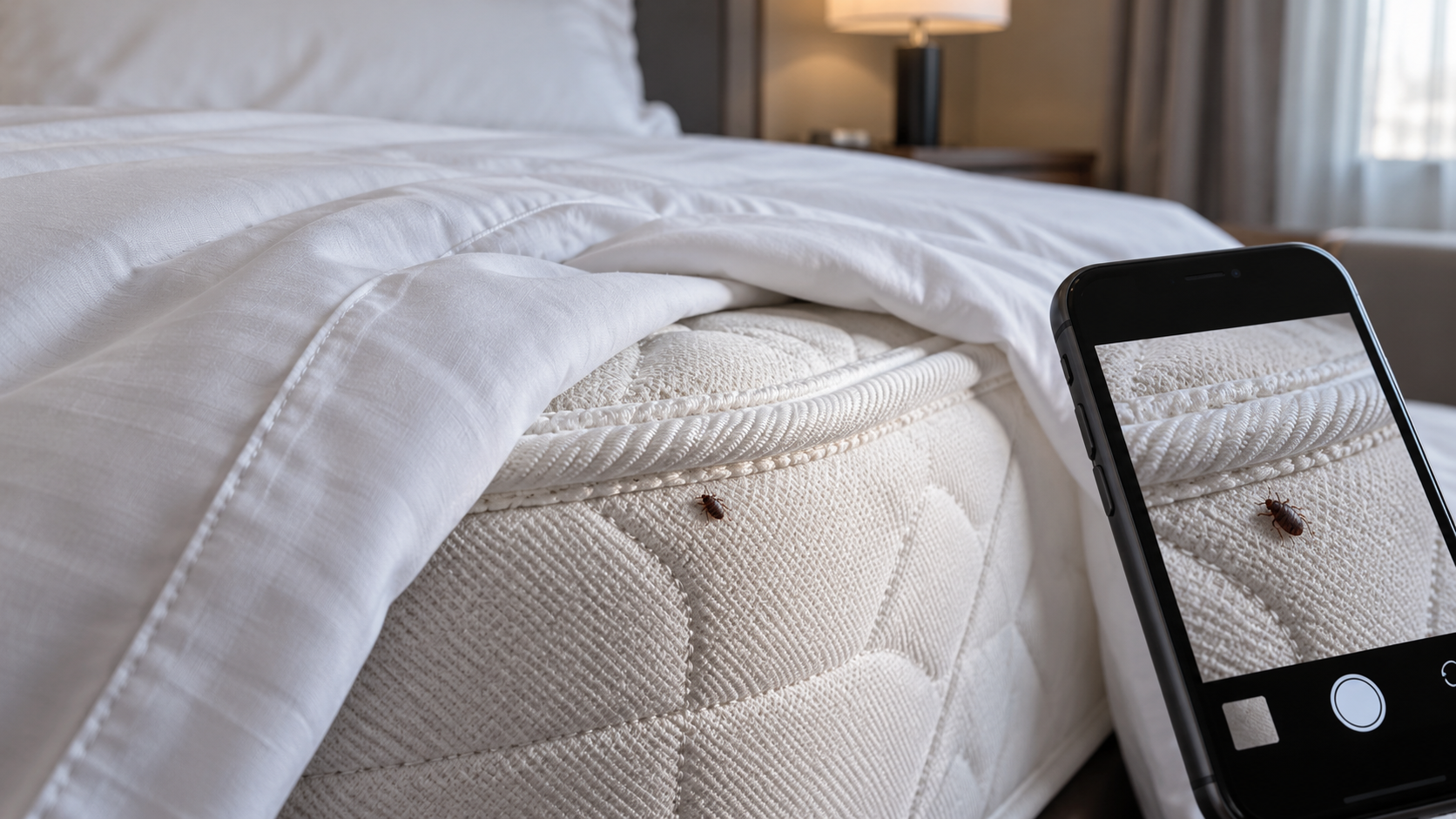
A skin mark alone may not identify the insect or the source of exposure. Photograph the suspected insects and the area where they were found, including mattress seams, furniture and the room setting. Keep original photographs and record when and where you took them. Obtain appropriate professional identification rather than assuming every insect is a bed bug.
Keep the hotel reservation, room number, check-in and check-out dates, receipts and travel timeline. For an apartment, retain the lease and note when the condition was first observed. Do not stage photographs or exaggerate the number of insects you saw.
Report the condition and preserve the response
Notify the hotel or property management promptly and keep a copy of written communications. Record whom you spoke with, when you reported the problem and what was offered or done. A report may help document the timeline; it does not by itself prove that management knew about a condition earlier.
Prior complaints, pest-control records, inspections and treatment history may be important. An investigation should examine the information available to the responsible parties and the reasonableness of their response. Finding bed bugs does not automatically establish every element of a personal injury claim.
Keep accurate injury and expense records
Seek appropriate medical care for symptoms and describe the timing and circumstances accurately. Save medical records, bills and photographs showing the progression of visible symptoms. Do not characterize a medical condition or its cause beyond what you actually know.
Keep itemized receipts for cleaning, treatment, replacement belongings or temporary lodging. Note why each expense was incurred and preserve communications concerning reimbursement. The fact that you paid an expense does not necessarily mean it will be recoverable in a claim.
Avoid spreading the problem while preserving evidence
Ask an appropriate pest-control professional for guidance about safely handling luggage, clothing and belongings. Do not bring potentially infested items into another residence simply to keep them as evidence. Document necessary disposal or treatment and discuss evidence concerns with your attorney before significant changes when practicable.
If management offers a refund, relocation or settlement, keep the full written terms. A room refund and a release of injury claims can have different consequences. Do not assume continued negotiations extend any filing deadline.
Have the facts reviewed promptly
A useful consultation includes the exposure timeline, identification evidence, medical information, prior complaints you know about and management’s response. Significant injuries or losses deserve a careful review of responsibility, causation and available evidence rather than a promise based only on the presence of insects.
General information, not legal advice. Each matter depends on its facts and applicable law. Viewing this article does not create an attorney-client relationship.

Get Help Now
Work directly with an experienced California personal injury attorney. Call 800-816-1529 for a free consultation about a serious California injury.
 About Attorney Norman Gregory Fernandez