

By Norman Gregory Fernandez, Esq.
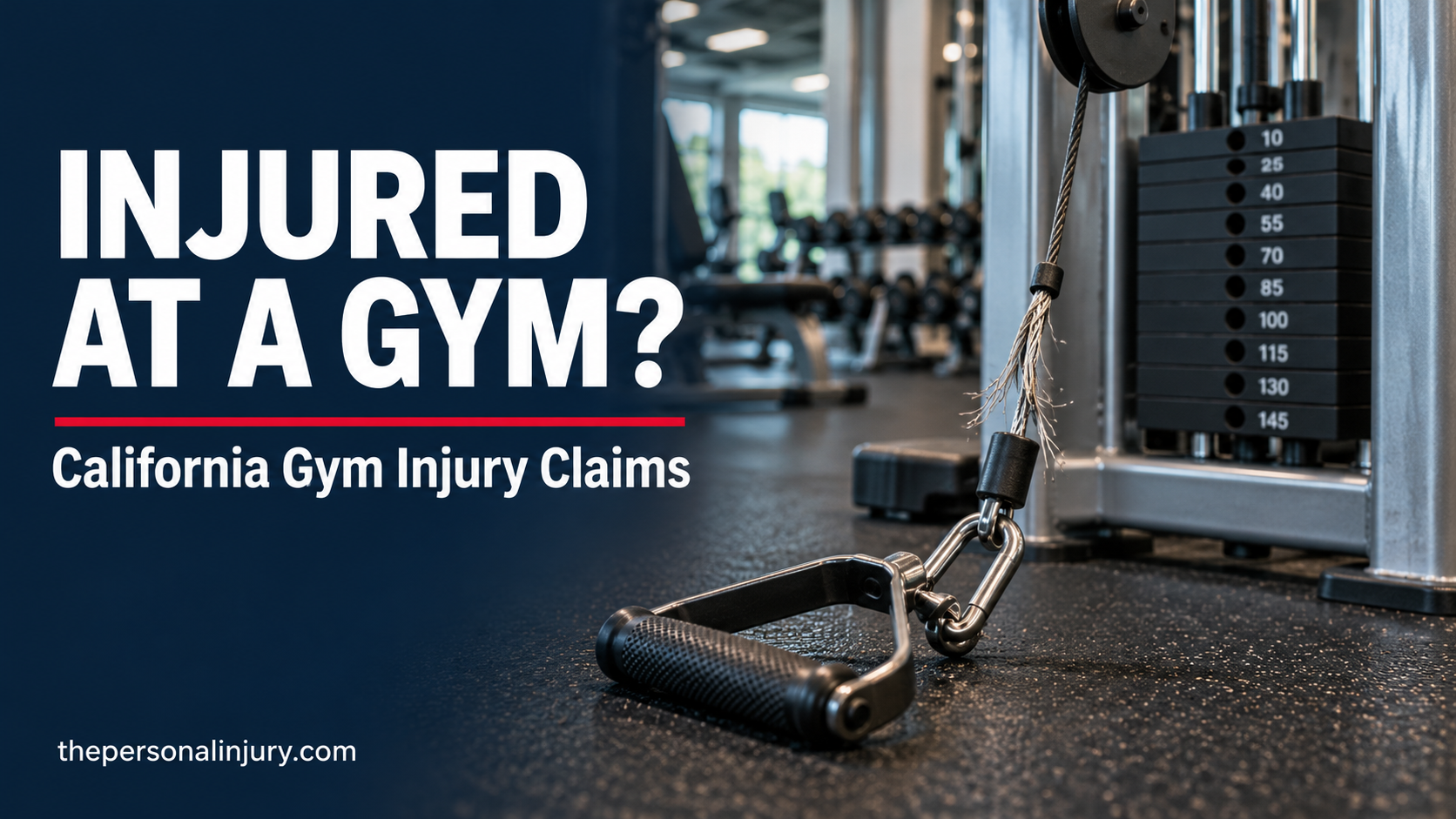
You are working out on a weight machine when a cable suddenly snaps. The equipment fails, and you suffer a serious injury. When you report what happened, the gym tells you that you signed a liability waiver.
Does that mean you have no case?
Not necessarily. Whether you can recover compensation after a California gym injury depends on how the injury happened, who was responsible, and the wording and enforceability of any release you signed. A gym membership agreement deserves careful review before you accept the gym’s claim that you waived your rights.
When Can a Gym Be Responsible for an Injury?
An injury at a gym does not automatically establish liability. The investigation must determine whether someone’s failure to use legally required care caused the injury and whether a waiver or another defense applies.
Potential issues include:
- Worn or damaged cables, attachments, and other equipment components.
- Failure to reasonably inspect and maintain exercise machines.
- Continued use of equipment after reports of a dangerous malfunction.
- Improper assembly or repair.
- Unsafe flooring, obstructions, or other dangerous property conditions.
California premises liability law generally requires those who own or control property to use reasonable care to discover and address unsafe conditions. What constitutes reasonable care depends on the circumstances.
For more information about unsafe property conditions, see our page on California premises liability claims.
Does a Gym Liability Waiver Prevent You From Suing?
A liability waiver can be a substantial obstacle. California courts may enforce a properly drafted recreational release covering a gym’s ordinary negligence, including certain equipment maintenance failures. However, an advance release generally cannot excuse gross negligence. Its wording, scope, and applicability to the particular incident matter.
Gross negligence involves a much more serious departure from reasonable care than ordinary negligence. A broken machine, a missed inspection, or a severe injury does not by itself establish gross negligence. The evidence must support that higher standard.
Do not assume either that your waiver defeats every claim or that negligent maintenance automatically overrides it. Have an attorney review the complete agreement and the circumstances surrounding the injury.
Could the Equipment Manufacturer Also Be Responsible?
The gym may not be the only party whose conduct needs to be investigated. As discussed in the accompanying video, an equipment manufacturer may also bear responsibility depending on what caused the failure.
An investigation should consider whether the machine or one of its components was defective, improperly installed, inadequately maintained, or incorrectly repaired. It should also identify who manufactured, supplied, assembled, and serviced the equipment.
A potential claim against an equipment manufacturer requires its own analysis. A gym is not automatically subject to strict products liability simply because it provides exercise equipment to members.
Gym Injuries Can Also Involve Slips and Trips
Equipment failures are only one possible source of gym injuries. Water on a walking surface, damaged flooring, or an obstruction near exercise equipment may require a different investigation.
For related information, read about California slip and fall injury claims and California trip and fall injury claims.
The condition of the area, inspection practices, prior complaints, and how the incident occurred can all help explain whether a dangerous condition caused the injury.
Preserve Evidence Before the Machine Is Repaired or Replaced
One of the video’s central points is the need to preserve evidence promptly. Once a machine is repaired, removed, or discarded, determining why it failed may become more difficult.
After a gym injury:
- Get appropriate medical care. Explain how the incident happened and identify your symptoms.
- Report the incident. Request an incident report and a copy, if available.
- Photograph the equipment and surrounding area when safe. Include identifying labels, the failed component, and visible conditions.
- Collect witness information. Record names and contact details.
- Keep your paperwork. Preserve your membership agreement, waiver, communications, and medical records.
- Seek legal help promptly. An attorney can request preservation of the machine, broken parts, surveillance footage, inspection records, maintenance records, and prior complaints.
Do not operate damaged equipment to recreate the accident or attempt to repair it yourself.
What Compensation May Be Available?
If a legally viable claim is established, potential compensation may include medical expenses, future treatment needs, lost income, reduced earning capacity, and pain and suffering. The available recovery depends on the evidence, applicable defenses, and the extent of the harm.
No responsible evaluation can promise a result based solely on the fact that gym equipment broke.
Speak With a California Gym Injury Attorney
If you were injured by broken exercise equipment or another dangerous condition at a gym in California, do not rely solely on the gym’s statement that you signed away your rights.
The Law Office of Norman Gregory Fernandez represents injured people throughout California. Practicing law since 1997, Norman Gregory Fernandez brings nearly three decades of experience to evaluating injury claims and identifying the evidence needed to pursue them.
Call 800-816-1529 for a free consultation. Have your membership agreement, photographs, and incident information available so we can discuss what happened.
This article provides general information about California law and does not create an attorney-client relationship.
 About Attorney Norman Gregory Fernandez