

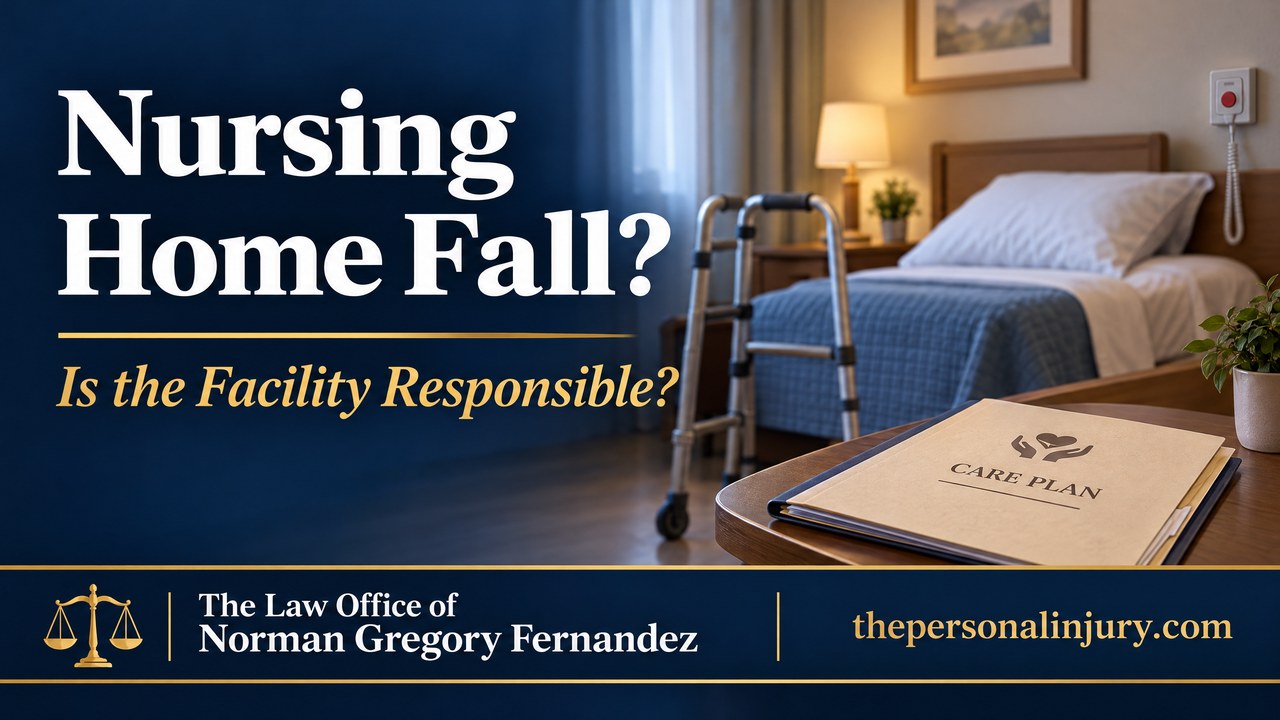
A nursing home may be responsible for your parent’s fall if it failed to provide the care required under the circumstances and that failure caused injury. A fall alone does not prove negligence. The important questions are what the facility knew about your parent’s needs, what precautions were appropriate, and whether staff actually provided the required assistance.
A call reporting a broken hip or head injury can leave a family frightened and unsure what to ask. “Falls happen” is not a complete explanation, but neither is every fall preventable. An evidence-based review looks beyond that statement without assuming wrongdoing.
What should a nursing home do about a resident’s fall risk?
Care should be individualized. A resident who walks independently may need different precautions from someone with dementia, impaired balance, a history of falls, or instructions requiring help with transfers. Assessments, care-plan updates, medication information, and the resident’s choices help determine the appropriate response.
For nursing facilities subject to federal participation requirements, 42 C.F.R. § 483.21 requires person-centered care planning and implementation. The accident-prevention provision in 42 C.F.R. § 483.25(d) addresses an environment as free of accident hazards as possible, adequate supervision, and assistance devices. These rules do not guarantee that no resident will fall, and assisted-living facilities are not necessarily governed by the same federal requirements.
When might a fall support a negligence claim?
As the video explains, a serious concern arises when a resident was identified as needing help but staff did not carry out the care plan. Other questions include whether a call for assistance went unanswered, whether a needed mobility device was available, or whether a known hazard remained unaddressed. These are issues to investigate—not conclusions established just because an injury occurred.
A care plan must be put into practice
If the plan required assistance getting out of bed or using the bathroom, compare that requirement with what happened. Who was assigned to help? Was the call button within reach? When was assistance requested, and when did staff respond? Records and witness accounts may clarify whether the prescribed support was actually provided.
The failure must have caused harm
A claim also requires evidence connecting the alleged failure to the fall and resulting injury. Medical records can help distinguish injuries caused by the incident from conditions that already existed. The resident’s age or vulnerability does not settle responsibility either way. A lawyer may need clinical records and expert input to assess the applicable standard of care and causation.
Is a nursing home fall automatically elder abuse?
No. Some cases involve ordinary negligence; others involve negligent professional nursing or medical services. A separate elder-neglect claim may arise from failure to meet an elder’s or dependent adult’s basic needs within a substantial custodial relationship. The facts and obligation breached determine the legal classification.
California Welfare and Institutions Code § 15610.57 includes failure to protect against health and safety hazards in its definition of neglect. Enhanced remedies under § 15657 require additional proof of recklessness, oppression, fraud, or malice; mere negligence is not enough. The proof requirements and available remedies must be evaluated under current law. Neither enhanced damages nor recovery is automatic.
What should your family do after a serious fall?
Put your parent’s health and immediate safety first. Seek prompt medical evaluation and emergency help when needed. Ask the treating team what was diagnosed, what follow-up is required, and what assistance is now necessary. Do not make treatment decisions based on the facility’s legal explanation or an online article.
Ask the facility for a factual account of the incident and the steps being taken to reduce further risk. Keep a dated record of who you spoke with and what they said. If your parent can describe the event, record their own words accurately without leading questions or pressure.
Preserve the information that may explain what happened
- Resident records: request available fall-risk assessments, care plans and revisions, relevant orders, nursing and therapy notes, medication records, and hospital records.
- Incident details: note the date, time, location, how staff discovered the fall, and the names and contact details of witnesses.
- Photographs and communications: preserve lawful photographs of injuries and relevant surroundings, along with emails, texts, and written complaints. Respect other residents’ privacy.
- Time-sensitive evidence: ask counsel promptly about preserving any available surveillance footage, call-light logs, electronic records, and relevant staffing assignments before routine deletion.
Not every record exists or is immediately available to a family member. Access depends on your parent’s rights, your legal authority, and applicable law; counsel may need formal procedures to obtain some material. Keep originals intact and do not edit the only copy of a photograph or message.
Protect the resident without overlooking legal deadlines
For concerns about a licensed or certified skilled nursing facility, the California Department of Public Health complaint process is a regulatory reporting option. An investigation is separate from a civil claim for compensation. Do not assume that making a complaint satisfies or extends lawsuit deadlines.
Speak with an attorney early. Filing periods, discovery rules, pre-suit notice, and possible public-entity claim requirements can depend on the defendant and whether the case concerns ordinary negligence, professional negligence, or custodial neglect. There is no single deadline that safely covers every nursing-home fall.
Frequently asked questions
What if my parent was already at high risk of falling?
That history does not automatically prove fault or excuse a failure to provide appropriate care. It helps identify what risks the facility knew about and what individualized precautions were reasonable.
Should staff have restrained my parent or raised all the bed rails?
Not automatically. Fall prevention must respect residents’ rights. Federal rules prohibit restraints used for discipline or convenience rather than medical need, and bed rails require their own safety assessment. Appropriate assistance is not the same as automatically restricting a resident’s movement.
Can I rely on the facility’s incident report alone?
It may be useful, but it is only one part of the evidence. Compare it with medical records, care instructions, witness accounts, and available electronic logs. A report should not replace independent assessment of how the fall occurred.
What compensation might be available?
Depending on the claim and proof, recoverable losses may include injury-related medical care, rehabilitation, additional care needs, and other legally compensable harm. The legal classification can affect damages and other remedies. No outcome or amount can be promised.
Get Help Now
Work directly with an experienced California personal injury attorney. The Law Office of Norman Gregory Fernandez & Associates represents injured people statewide. Norman Gregory Fernandez has practiced law since 1997, bringing nearly three decades of experience. We are not a settlement mill. Call 800-816-1529 for a free consultation or contact our office.
Related Links
- California nursing home neglect: care failures and warning signs
- California nursing home abuse and neglect claims
- California injury case information and preparation guides
Attorney advertising. General legal information, not medical advice or advice about your specific case. No result is guaranteed. Viewing this article or video does not create an attorney-client relationship; representation requires a signed engagement agreement. The video uses an AI-generated attorney avatar. The featured artwork is an editorial illustration, not client evidence.
 About Attorney Norman Gregory Fernandez