
Falling on someone else’s property does not, by itself, establish a California injury claim. A useful investigation starts with a more specific question: what caused the fall? In this video, attorney Norman Gregory Fernandez explains why the condition, the responsible parties and the available evidence matter.
Identify the condition that caused the fall
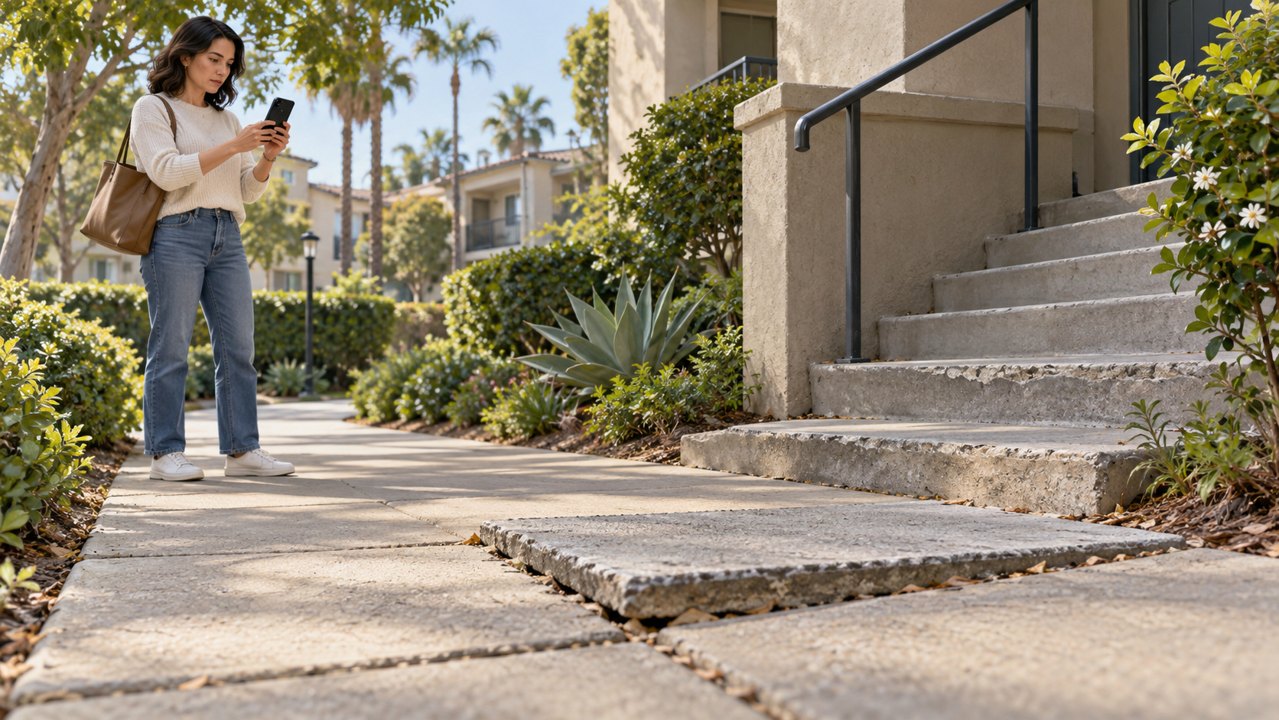
A slippery substance, uneven surface, damaged step, poor lighting or debris may require investigation. Describe what you actually saw and felt. Identify where your foot slipped or caught, the direction you were traveling and the lighting at the time. Avoid guessing about a condition you did not observe.
Photographs can help when they show both the detail and its surroundings. A close-up may document a broken edge, while a wider view shows its position in the walking route. Preserve original files and explain when each photograph was taken. A photograph after cleanup or repair may show a different scene.
Ownership is only part of the responsibility question
The owner, tenant, business operator, property manager or a maintenance company may have different roles. Who controlled the area? Who inspected it? Who was responsible for repairs? A business name on a sign may not identify every relevant legal entity.
Keep receipts, incident report information, addresses and communications that help identify the location and the people involved. Do not assume everyone connected to a property is liable. An attorney must examine each potential party’s responsibilities and connection to the condition.
What did the responsible party know?
Many premises cases involve whether a dangerous condition was known or should have been discovered through reasonable care. Prior complaints, inspection practices, maintenance records and the length of time a condition existed may help answer that question. The analysis can differ when a party created the condition.
A spill that appeared moments earlier presents different evidence questions from a deteriorating stair reported repeatedly. That does not decide either case in advance. It explains why simply showing a wet floor or broken surface may leave important issues unresolved.
Preserve evidence before the scene changes
Report the incident accurately and retain any report number or written response. Identify witnesses and nearby cameras. Surveillance may cover the period before the fall, including how a condition developed or whether anyone inspected the area. A prompt preservation request can be important, although it does not guarantee footage exists.
Keep shoes and clothing in their existing condition when they may be relevant. Save complete messages rather than selected screenshots alone. Never enter restricted areas, move a hazard to recreate an accident or alter evidence to strengthen a claim.
Connect the condition to the injury
The investigation also needs evidence that the condition caused the fall and that the fall caused the claimed harm. Medical records, an accurate treatment history, bills and documentation of missed work can help evaluate those issues. Be candid about prior symptoms, later incidents and uncertainty in your recollection.
A serious injury deserves careful attention, but severity alone does not establish negligence. An individualized review can identify the evidence still needed, potential defenses and applicable deadlines. Public property or public entities may involve additional claim requirements, so seek advice promptly rather than assuming one deadline fits every case.
General information, not legal advice. Every matter depends on its facts and applicable law. Viewing this article does not create an attorney-client relationship.
 About Attorney Norman Gregory Fernandez