

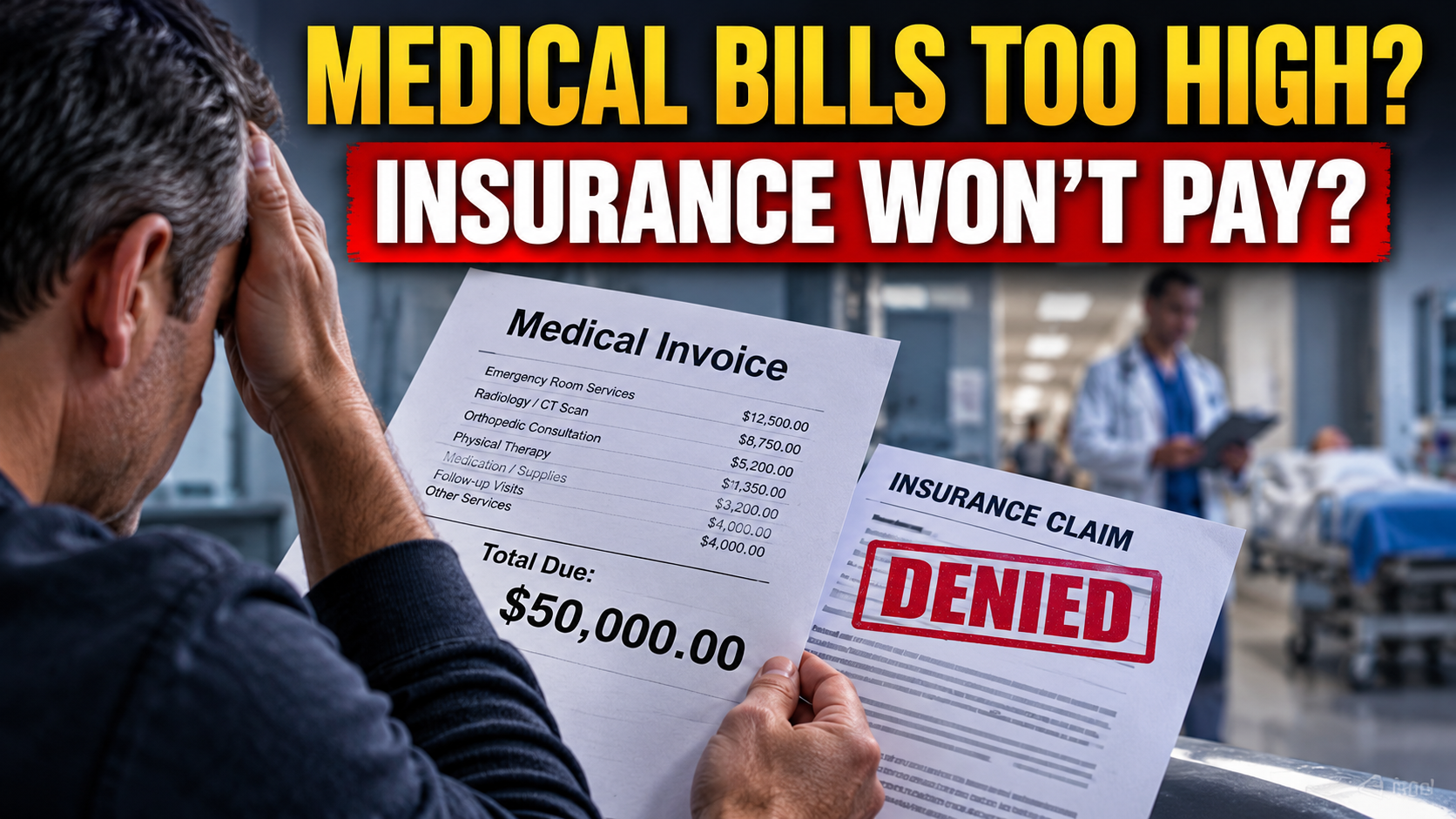
You were injured in a car accident, slip-and-fall, motorcycle crash, or another accident caused by someone else’s negligence.
You sought medical treatment. You went to the emergency room, visited specialists, attended physical therapy, and followed your doctors’ recommendations.
Now you have thousands of dollars in medical bills.
But when you submit your personal injury claim, the insurance adjuster tells you something you weren’t expecting:
“Your medical bills are too high. We’re not paying all of that.”
Can an insurance company really challenge your medical bills after an accident in California?
Yes. But that does not mean the insurance company is correct, and it certainly doesn’t mean your personal injury case is worthless.
I’m attorney Norman Gregory Fernandez. I’ve been representing injured people throughout California for nearly 30 years. Here’s what you need to know.
Watch My Video: Can Insurance Companies Refuse to Pay Your Medical Bills?
In this short video, I explain why insurance companies challenge medical expenses, what California law says about recoverable medical bills, and why your personal injury claim may be worth more than your medical expenses alone.
[Place your YouTube Short embed here.]
Why Do Insurance Companies Challenge Medical Bills?
When an insurance company evaluates a personal injury claim, it generally examines more than the total amount charged by your medical providers.
An adjuster may question:
- Medical necessity: Was the treatment reasonably necessary for the injuries?
- Causation: Was the treatment required because of the accident, or was it related to a separate condition?
- Reasonableness of charges: Were the amounts charged reasonable for the services provided?
- Duration of treatment: Was the length and frequency of treatment medically justified?
- Preexisting conditions: Were some symptoms or medical problems present before the accident?
- Gaps in treatment: Did interruptions in medical care affect the evidence supporting the claim?
An insurance company’s disagreement with your medical expenses does not, by itself, establish that the treatment was unnecessary or that the charges were unreasonable.
These issues may ultimately depend on medical records, expert testimony, billing evidence, and the particular circumstances of your case.
California Law: What Is the Howell Rule?
One of the most important California Supreme Court decisions concerning medical expenses in personal injury cases is Howell v. Hamilton Meats & Provisions, Inc. (2011) 52 Cal.4th 541.
Under Howell, an injured person generally cannot recover the portion of a medical bill that a healthcare provider has contractually written off under a negotiated health insurance agreement.
For example, suppose:
- A hospital originally bills $40,000.
- Your health insurance and the hospital have negotiated rates.
- The hospital accepts $15,000 as full payment.
Under the circumstances addressed in Howell, the additional $25,000 that the hospital agreed to write off is generally not recoverable as past medical expense damages.
That does not mean the injured person suffered only $15,000 worth of harm.
It means that the recoverable amount of past medical expenses is governed by California’s rules concerning actual economic loss and the reasonable value of medical services.
Different considerations may apply when treatment is unpaid, provided on a lien, or obtained without health insurance.
What If You Don’t Have Health Insurance?
Not every injured person has health insurance.
Some accident victims receive treatment through medical liens, letters of protection, or arrangements under which the provider agrees to wait for payment until the personal injury case is resolved.
In these situations, determining recoverable medical expenses can be more complicated.
California courts have addressed the reasonable value of medical services in cases involving uninsured patients and medical liens, including Bermudez v. Ciolek (2015) 237 Cal.App.4th 1311.
The amount appearing on a medical bill is relevant, but it does not automatically establish the reasonable value of the treatment.
The important point is that medical expenses must be evaluated under the applicable California law and the evidence—not simply accepted or rejected based on an adjuster’s opinion.
Your Personal Injury Case Is About More Than Medical Bills
This is something I want every injured Californian to understand.
Your medical bills are only one component of a personal injury claim.
Depending on the circumstances and available evidence, recoverable damages may include:
1. Past Medical Expenses
The reasonable and legally recoverable cost of medical care required because of the accident.
2. Future Medical Expenses
The reasonable cost of medically necessary treatment you are likely to require in the future because of your injuries.
3. Lost Earnings
Income lost because your injuries prevented you from working.
4. Loss of Future Earning Capacity
Compensation for a demonstrated reduction in your ability to earn income in the future.
5. Physical Pain and Suffering
Compensation for physical pain, discomfort, and the effects of your injuries.
6. Emotional Distress
Compensation for legally recoverable emotional and psychological harm associated with the injuries.
7. Loss of Enjoyment of Life
Compensation for the ways an injury interferes with activities and experiences you previously enjoyed, as part of recoverable noneconomic damages.
An insurance adjuster cannot properly evaluate the full impact of a serious injury by looking at medical bills alone.
What Should You Do If an Insurance Company Says Your Medical Bills Are Excessive?
If the insurance company is challenging your medical expenses, consider these steps:
1. Obtain your medical records and billing statements. Make sure the documentation accurately identifies your injuries, treatment, and medical charges.
2. Review your health insurance payments and adjustments. The original billed amount may differ substantially from the amount paid or legally owed.
3. Identify unpaid medical bills and liens. Outstanding balances and payment arrangements may affect both the evaluation and distribution of a settlement.
4. Document the effect of your injuries. Keep accurate information concerning missed work, physical limitations, pain, and activities you can no longer perform.
5. Discuss treatment concerns with your healthcare providers. Medical decisions should be based on your health, not on what an insurance adjuster wants to see.
6. Don’t assume the insurance company’s settlement offer is fair. A proper evaluation should address liability, causation, legally recoverable medical expenses, future losses, and noneconomic damages.
Can You Sue If the Insurance Company Refuses to Pay Your Medical Bills?
If you have a valid personal injury claim against a negligent party, you may be able to pursue compensation through a lawsuit against the legally responsible person or entity.
In many cases, the liability insurer defends and pays covered claims on behalf of its insured. An adjuster’s refusal to recognize particular expenses does not necessarily prevent you from pursuing those damages in litigation.
California generally provides a two-year statute of limitations for personal injury actions under Code of Civil Procedure section 335.1, although exceptions and different deadlines may apply.
Claims involving government entities can have substantially shorter claim-presentation deadlines.
Do not allow extended negotiations over medical bills to cause you to miss a legal deadline.
Nearly 30 Years Representing California Personal Injury Victims
At The Law Office of Norman Gregory Fernandez & Associates, we represent people injured in automobile accidents, motorcycle accidents, truck accidents, slip-and-fall accidents, and other negligence cases throughout California.
My firm is not a settlement mill.
When you contact us, you are seeking representation from an experienced California personal injury attorney who understands how insurance companies evaluate and challenge injury claims.
If you’ve been injured, don’t assume that the insurance company’s assessment of your medical expenses is the final word.
Injured in California? Call for a Free Consultation
The Law Office of Norman Gregory Fernandez & Associates
Website: https://thepersonalinjury.com
Serving injured people throughout California.
Attorney Norman Gregory Fernandez
This article provides general information about California personal injury law and does not constitute legal advice for any particular situation. Reading this article does not establish an attorney-client relationship. Every case depends on its facts and applicable law.

Get Help Now
The Law offices of Norman Gregory Fernandez & Associates has almost 3 decades of experience handling personal injury cases all over the state of California. We have handled thousands of cases and obtained millions of dollars in settlements and judgments for our clients. Call now for a no pressure free consultation with an actual attorney. Call 800-816-1529 extension 1, click the chat button on the left, or click here to submit your case.
Related California Personal Injury Articles
- Why Medical Care Is Essential to Your California Personal Injury Claim – Learn how medical treatment and documentation affect your injury claim.
- What Compensation Can You Recover in a California Personal Injury Case? – Understand medical expenses, lost earnings, pain and suffering, and other damages.
- How Our Law Firm Handles Your California Personal Injury Case – Learn how we approach medical care, evidence gathering, and settlement negotiations.
 About Attorney Norman Gregory Fernandez